
Beyond History: How San Francisco's Transgender District is Redefining Queer Space & Economic Power
Explore the untold story of San Francisco's Transgender District — from dropping Gene Compton's name to building trans economic power and business ownership in the Tenderloin.
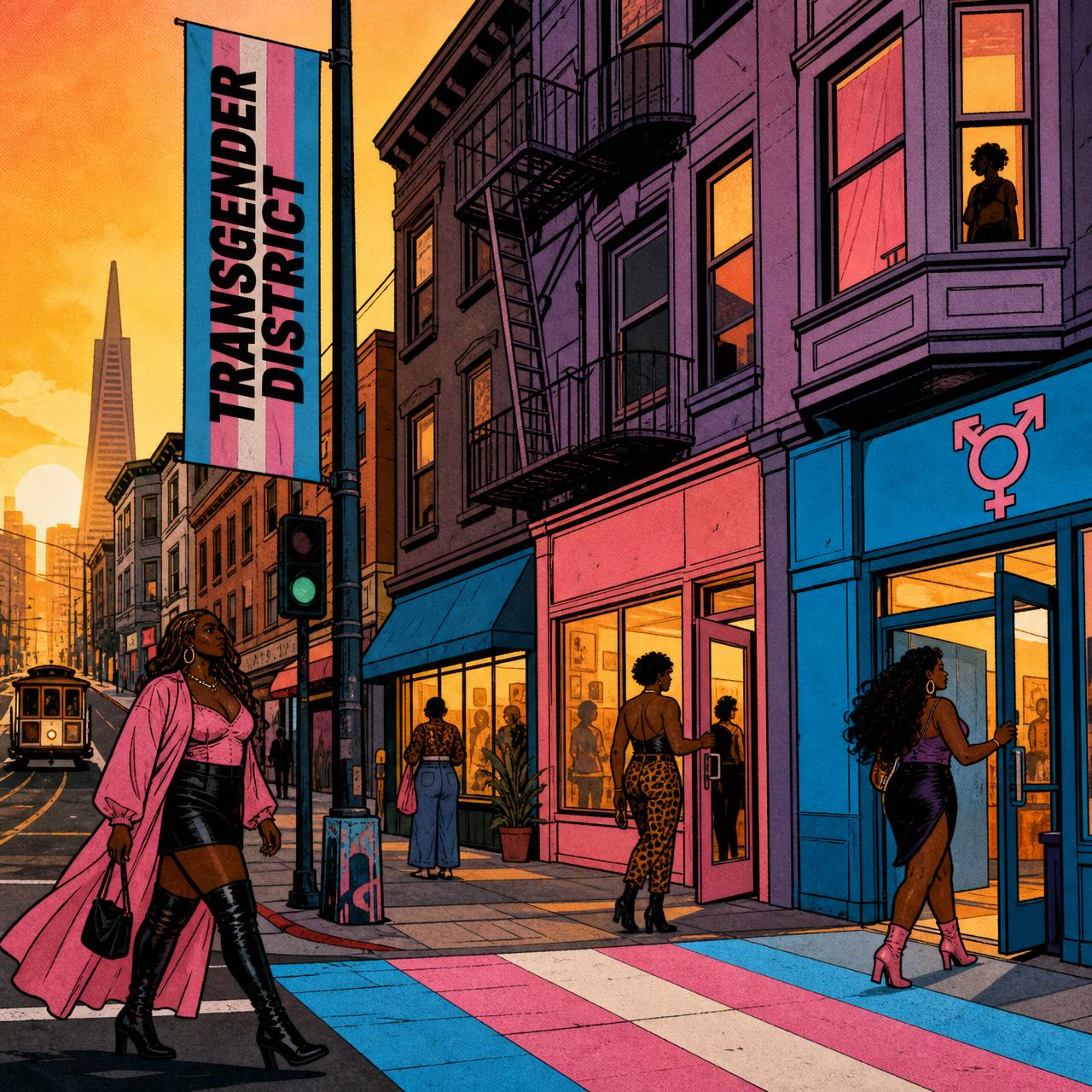
The Discovery That Changed How I Saw San Francisco
When I was building out the San Francisco destination for The Queer Route, I came across a piece of history that stopped me in my tracks: The Transgender District.
Like many travelers, I knew about the Castro. I knew about the famous rainbow crosswalks and the historic legacy of Harvey Milk. But tucked into six blocks of San Francisco's Tenderloin neighborhood was something I had never heard of — the world's first legally recognized cultural district tailored specifically by and for the transgender community.
As I dug deeper, I realized this wasn't just a monument to the past. It is an active blueprint for economic power, spatial safety, and community ownership.
Reclaiming the Narrative: Why Names Matter
To understand the power of this district, you have to look at how it started — and how it evolved.
Many queer history books mention the 1966 Compton's Cafeteria Riot, where trans women, drag queens, and hustlers stood up against police harassment in the Tenderloin, three full years before Stonewall. When the cultural district was initially created in 2017, it was called Compton's Transgender Cultural District.
But in 2020, the district's leadership — co-founded by Black trans activists Aria Sa'id, Janetta Johnson, and Honey Mahogany — made a powerful decision: they dropped Gene Compton's name.
Why? Because Gene Compton wasn't a hero; he was a restaurant owner who regularly called the police on trans patrons simply for existing.
True liberation doesn't mean honoring the establishment venues that oppressed our pioneers. It means honoring our people and taking ownership of the space ourselves.
Beyond Gentrification: Building Economic Ownership
For decades, traditional "gayborhoods" across the country have faced a recurring tragedy: gentrification. The very working-class, trans, and gender-nonconforming people of color who built these spaces were systematically priced out and displaced by rising rents and corporate developments.
The Transgender District flips that script entirely. It isn't just about placing historic plaques on buildings; it's an active economic power play.
Through initiatives like their Entrepreneurship Accelerator Program, housing subsidies, and workforce development, the District actively funds trans-owned small businesses, helps trans residents secure local housing, and advocates for land use rights in the city.
They recognized a fundamental truth that lies at the core of The Queer Route: Safe spaces cannot exist without economic sustainability. When our community owns the land, the storefronts, and the businesses, we don't have to ask permission to be safe — we guarantee it ourselves.
Why This Matters for the Modern Queer Traveler
When you visit San Francisco today, exploring The Transgender District isn't just a sightseeing stop — it's an act of intentional community investment.
When we built The Queer Route, we wanted to give travelers more than just a list of popular bars. We wanted to provide a map of true belonging. Knowing the story of the Tenderloin reminds us that as we travel, we have the power to support the businesses, culture, and people who keep our history alive on the ground.
Next time you're in San Francisco, step beyond the typical tourist paths. Walk the Tenderloin, learn the history of 1966, and support a district that is actively mapping a future where trans leadership, entrepreneurship, and safety reign supreme.
Planning a trip to San Francisco? Explore our full San Francisco City Guide on the web, then download The Queer Route app on iOS and Android to navigate verified, affirming spaces on the go! 🗺️🏳️⚧️
Keep reading
5 Ways to Detect Danger at a Gay Bar or Club
LGBTQ+ nightlife safety guide: 5 ways to spot danger early at a gay bar or club, defuse tension, leave safely, and use the Follow Me tool to confirm your friends get home.
CommunityWhat Does a Real Gay Ecosystem Look Like?
The Pink Dollar is worth trillions, but most gay travel sites just harvest affiliate commissions. Here's what a real queer economic ecosystem looks like — and how QR Certified venues keep our money circulating in our own community.
Budget travelBreaking the Poverty Mindset: Why Every Queer Person Deserves a Reset (Even on a Budget)
Budget LGBTQ+ travel guide: 5 ways to beat the poverty mindset, plan cheap queer micro-getaways, find free safe spaces, and build a reset fund — rest isn't a luxury for the top tax bracket.
CommunityWhat We Have Become
Media that trades in fear and stereotype has real consequences on the streets we walk. On Run, Hide, Fight: Infidels, harmful tropes, and why intersectional safety means standing with Muslim, Black, and brown communities.
CommunityIf It Ain't Broke...
Historic LGBTQ+ bars are changing hands across the country. When new ownership reinvents the wheel, the regulars pay for it. On modernizing legacy queer spaces without erasing the community that built them.
CommunityWill They Ever Learn?
Texas painted over Austin's rainbow Pride crosswalk. Paint fades — we don't. On political erasure, the $4.7 trillion Pink Dollar, and why we built our own map.
TravelTop Three U.S Cities Queer Families Should Visit
Queer parents deserve family destinations where their family structure is respected, visible, and celebrated. Here are three U.S. cities that deliver inclusive communities and standout attractions.
CommunityWhy Do Some Cities Have Black Pride and National Pride?
Black Pride was never about dividing us — it was a declaration that we are here, too. A look at how Pride Season came to be, and why tailored celebrations still matter.
Vendor SpotlightVendor Spotlight: Whip My Soul
A Black-owned soul food restaurant in Austin that treats hospitality like a craft. Here's why Whip My Soul belongs at the top of your list — and exactly what to order.
CompanyWhy We Built The Queer Route: The Founder's Story
I built the app I needed — from a 9-to-5 and a paycheck. Keith Givens on why the LGBTQ+ community needed its own navigation platform.
Travel GuidesHow to Find LGBTQ+ Safe Spaces When Traveling in 2026
Beyond the rainbow flag: a real-time, community-verified guide to finding truly safe spaces on the road in 2026.
Safety6 Green Flags That Signal a Truly LGBTQ+ Friendly Venue
A Progress Pride sticker in the window isn't enough anymore. Here are the real indicators that a bar, café, or hotel is genuinely safe, inclusive, and built for our community — and how to spot them before you step inside.
Find safe spaces in these cities
Community-verified LGBTQ+ guides to bars, nightlife, and neighborhoods.