
If It Ain't Broke...
Historic LGBTQ+ bars are changing hands across the country. When new ownership reinvents the wheel, the regulars pay for it. On modernizing legacy queer spaces without erasing the community that built them.
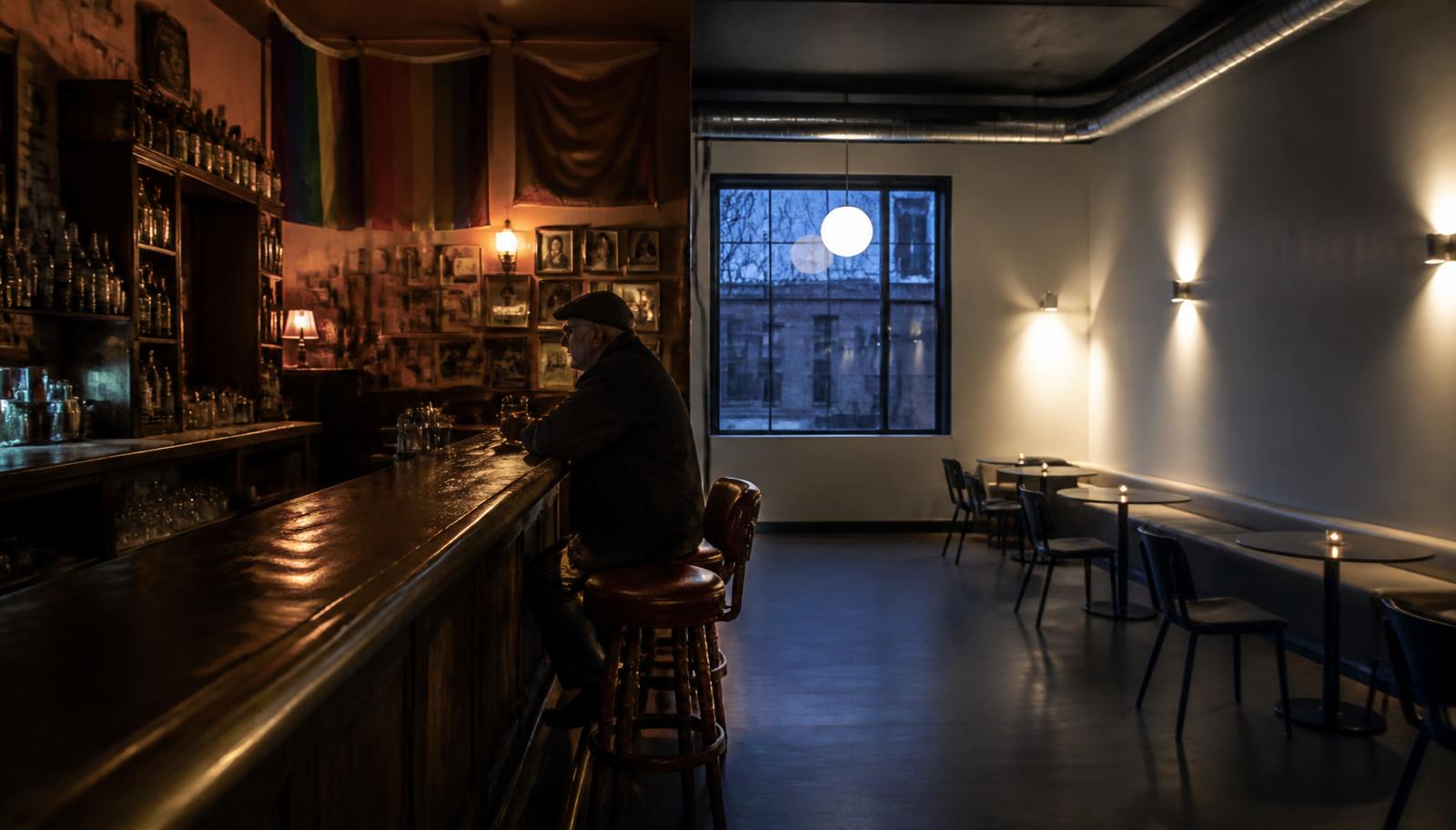
Across the country, historic LGBTQ+ bars face a quiet crisis. Rising rents, changing socialization habits, and shifting demographics have forced dozens of legendary spaces to either shutter permanently or pass the torch to new ownership.
When a long-standing queer watering hole changes hands, the transition rarely happens in a vacuum. A familiar narrative frequently plays out: new management steps in, assesses a decades-old neighborhood anchor, and immediately decides the entire wheel needs to be reinvented.
The Realities of Modern Nightlife Ownership
To be fair to new proprietors, keeping any hospitality business afloat today is an uphill battle. The financial landscape of running an independent venue has fundamentally changed:
- Shifting Consumption Habits: Younger queer generations drink less alcohol on average, socialize across broader digital networks, and often prefer multi-use daytime spaces over dark, late-night dive bars.
- Escalating Overhead: Rising commercial lease rates, insurance costs, and city permitting fees mean high-margin craft cocktails and ticketed weekend events are often necessary just to break even.
- The Demand for Modern Inclusivity: Younger patrons expect gender-neutral facilities, non-alcoholic craft menus, and active community accountability right out of the gate.
When done thoughtfully, modernization breathes vital new life into a historic room. It welcomes younger patrons, introduces gender-affirming programming, and ensures an institution survives for another decade.
However, trouble begins when "trendy" replaces "community."
The Living Room vs. The Event Space
Legacy gay bars were never just commercial businesses — they served as living rooms, safe harbors, and intergenerational meeting grounds for folks who often had nowhere else to gather. When renovations prioritize aesthetic trends over lived-in comfort, an unspoken social contract breaks down:
- The Erasure of the Daytime Regular: Longtime patrons — often older, working-class, or part of specific subcultures like the bear and leather communities — frequently find their daytime sanctuaries stripped of character, replaced by dim aesthetic lighting, loud curated playlists, and rigid patio restrictions.
- The Over-Correction of Atmosphere: Implementing heavy-handed door policies, rigid curfews, or heightened surveillance can make loyal patrons and newcomers alike feel policed rather than protected.
- The Mid-Week Ghost Town: Chasing transient weekend crowds at the expense of loyal Tuesday-afternoon regulars creates a volatile business model. The customers who keep the lights on during the slow winter months are usually the ones who feel pushed out.
Bridging the Generational Divide
Finding balance does not mean keeping a venue frozen in amber. Successful transitions across the country prove that legacy and innovation can coexist under one roof:
- Dayparts and Programming Over Overhauls: Maintain the relaxed, low-cost dive vibe during daytime and weeknight hours for the regulars, while activating late-night weekends with high-energy DJs, drag revues, or themed takeovers.
- Preserving the Artifacts: Refreshing the sound system and plumbing doesn't require stripping the historic photos, banners, and tactile patina that gave the walls their original character.
- Listening Before Levelling: The most respected new owners spend their first few months behind the wood, listening to what the community actually values before making sweeping changes to the environment.
Evolution Without Alienation
A queer space does not have to choose between honoring its legacy and embracing the future. The most successful reinventions nationwide treat existing community culture with stewardship rather than inconvenience.
Evolution should feel like an invitation, not a hostile takeover. When owners preserve the soul that built the foundation while gently opening the door for new demographics, everyone gets to keep their home.
Know a bar that got it right? The Queer Route is built on community-verified safe spaces — browse our city guides or download the app on iOS and Android to rate the rooms that still feel like home. 🏳️🌈
Download The Queer Route.
Real-time, community-verified safe spaces — built by us, for us. Now live in Austin & beyond.
Keep reading
Finding the Vibe: Is Luxx Quietly Becoming 4th Street’s Hidden Black Queer Gem?
Keith Givens reflects on a Saturday night at Luxx in Austin, where contemporary R&B, Black and brown queer community, and a welcoming room sparked a question about 4th Street’s nightlife.
Neighborhoods & Queer CultureThe Texas Triangle: How Dallas, Austin, and Houston Built Three Completely Different Queer Worlds
Dallas vs Austin vs Houston gay nightlife: how Oak Lawn's strip, Austin's independent rooms, and Houston's unzoned sprawl and hospitality collectives shaped three queer scenes.
Outdoor Travel & SafetyGay Camping & Retreats: The Ultimate Guide to Unplugging, Community, and Safe Ground
A guide to gay camping and queer retreats: festival gatherings like Frolic, LGBTQ+ campgrounds, sober eco-retreats, first-timer tips, and rural travel safety.
Neighborhoods & Queer CultureThe Crossroads Playbook: How Oak Lawn Built a Daylight Sanctuary That Defied Texas Politics
Explore Cedar Springs and Dallas’s Oak Lawn gayborhood: Hunky’s daytime community roots, iconic gay bars, and an intentional walking route through The Crossroads.
Community SpotlightBeyond the Perimeter: Inside BTC, the Groundbreaking LGBTQ+ Sanctuary Thriving Behind Tennessee Prison Walls
Keith Givens interviews BTC founder Varia about LGBTQIA+ community behind Tennessee prison walls, safe spaces, leadership, and meaningful outside solidarity.
Queer Culture & Spatial SafetyThe Sanctuary of the Mask: Why Halloween Is Gay Christmas (and How to Navigate the Nation's Biggest Street Parties Safely)
Why Halloween is Gay Christmas: the history of queer costume as survival, plus safety logistics for the Oak Lawn block party, Haunted Halsted, Fantasy Fest, and the WeHo Carnaval.
Queer Culture & Spatial SafetyTwo Continents, One Towel: The Reality, Etiquette, and Safety of Gay Bathhouses in the U.S. vs. Abroad
What happens in a gay bathhouse? A practical guide to bathhouse etiquette, safety, consent, and the cultural differences between U.S. clubs and European saunas.
City SpotlightsOnly in Portland: 3 Queer Experiences You Won't Find Anywhere Else in the Country
Trans-centered bathhouses, a deep ecosystem of sober queer third places, and sex-positive community wellness — three Portland experiences you can't get anywhere else in the U.S.
Queer Culture & Spatial SafetyBeyond the Stereotypes: How Tech, Consent, and Culture Redefined Gay Cruising
Cruising is one of the most resilient practices in gay culture and one of the most stigmatized. A look at how map-based apps, consent, and community norms reshaped it.
CruisesGay Cruises: The Ultimate First-Timer's Guide to Sailing Proud
A first-timer's guide to gay cruises: Atlantis vs. VACAYA, full-ship charters vs. group sailings, theme parties, solo travel, and the safety rules that matter at sea and in port.
Atlanta PrideThe Ultimate Atlanta Pride Guide: History, Local Culture, and Safe Routing
Atlanta Pride guide for LGBTQ+ travelers: why Pride happens in October, where to go in Midtown and EAV, how to use MARTA, and safety routing around Piedmont Park.
Global Safety & Economic PowerLegal on Paper, Targeted in Reality: From Istanbul to the U.S., Safe Spaces Are Under Siege
Turkey's 1 AM raids on gay bars and the escalating attacks on queer spaces in the U.S. share one message: legality is not safety. Why verified safe spaces — and the $3.9 trillion Pink Dollar — are our strongest defense.
International travelThe Queer Route Is the Safe Haven for Queer Travelers
LGBTQ+ travel safety in the Bahamas, Jamaica, and South Africa: the laws, the risks, the underground queer joy, and how community-verified safe spaces give Black and brown travelers a route to sanctuary abroad.
Safety5 Ways to Detect Danger at a Gay Bar or Club
LGBTQ+ nightlife safety guide: 5 ways to spot danger early at a gay bar or club, defuse tension, leave safely, and use the Follow Me tool to confirm your friends get home.
CommunityWhat Does a Real Gay Ecosystem Look Like?
The Pink Dollar is worth trillions, but most gay travel sites just harvest affiliate commissions. Here's what a real queer economic ecosystem looks like — and how QR Certified venues keep our money circulating in our own community.
Budget travelBreaking the Poverty Mindset: Why Every Queer Person Deserves a Reset (Even on a Budget)
Budget LGBTQ+ travel guide: 5 ways to beat the poverty mindset, plan cheap queer micro-getaways, find free safe spaces, and build a reset fund — rest isn't a luxury for the top tax bracket.
CommunityWhat We Have Become
Media that trades in fear and stereotype has real consequences on the streets we walk. On Run, Hide, Fight: Infidels, harmful tropes, and why intersectional safety means standing with Muslim, Black, and brown communities.
City SpotlightBeyond History: How San Francisco's Transgender District is Redefining Queer Space & Economic Power
Explore the untold story of San Francisco's Transgender District — from dropping Gene Compton's name to building trans economic power and business ownership in the Tenderloin.
CommunityWill They Ever Learn?
Texas painted over Austin's rainbow Pride crosswalk. Paint fades — we don't. On political erasure, the $4.7 trillion Pink Dollar, and why we built our own map.
TravelTop Three U.S Cities Queer Families Should Visit
Queer parents deserve family destinations where their family structure is respected, visible, and celebrated. Here are three U.S. cities that deliver inclusive communities and standout attractions.
CommunityWhy Do Some Cities Have Black Pride and National Pride?
Black Pride was never about dividing us — it was a declaration that we are here, too. A look at how Pride Season came to be, and why tailored celebrations still matter.
Vendor SpotlightVendor Spotlight: Whip My Soul
A Black-owned soul food restaurant in Austin that treats hospitality like a craft. Here's why Whip My Soul belongs at the top of your list — and exactly what to order.
CompanyWhy We Built The Queer Route: The Founder's Story
I built the app I needed — from a 9-to-5 and a paycheck. Keith Givens on why the LGBTQ+ community needed its own navigation platform.
Travel GuidesHow to Find LGBTQ+ Safe Spaces When Traveling in 2026
Beyond the rainbow flag: a real-time, community-verified guide to finding truly safe spaces on the road in 2026.
Safety6 Green Flags That Signal a Truly LGBTQ+ Friendly Venue
A Progress Pride sticker in the window isn't enough anymore. Here are the real indicators that a bar, café, or hotel is genuinely safe, inclusive, and built for our community — and how to spot them before you step inside.
Find safe spaces in these cities
Community-verified LGBTQ+ guides to bars, nightlife, and neighborhoods.